 INR
INR  USD
USD 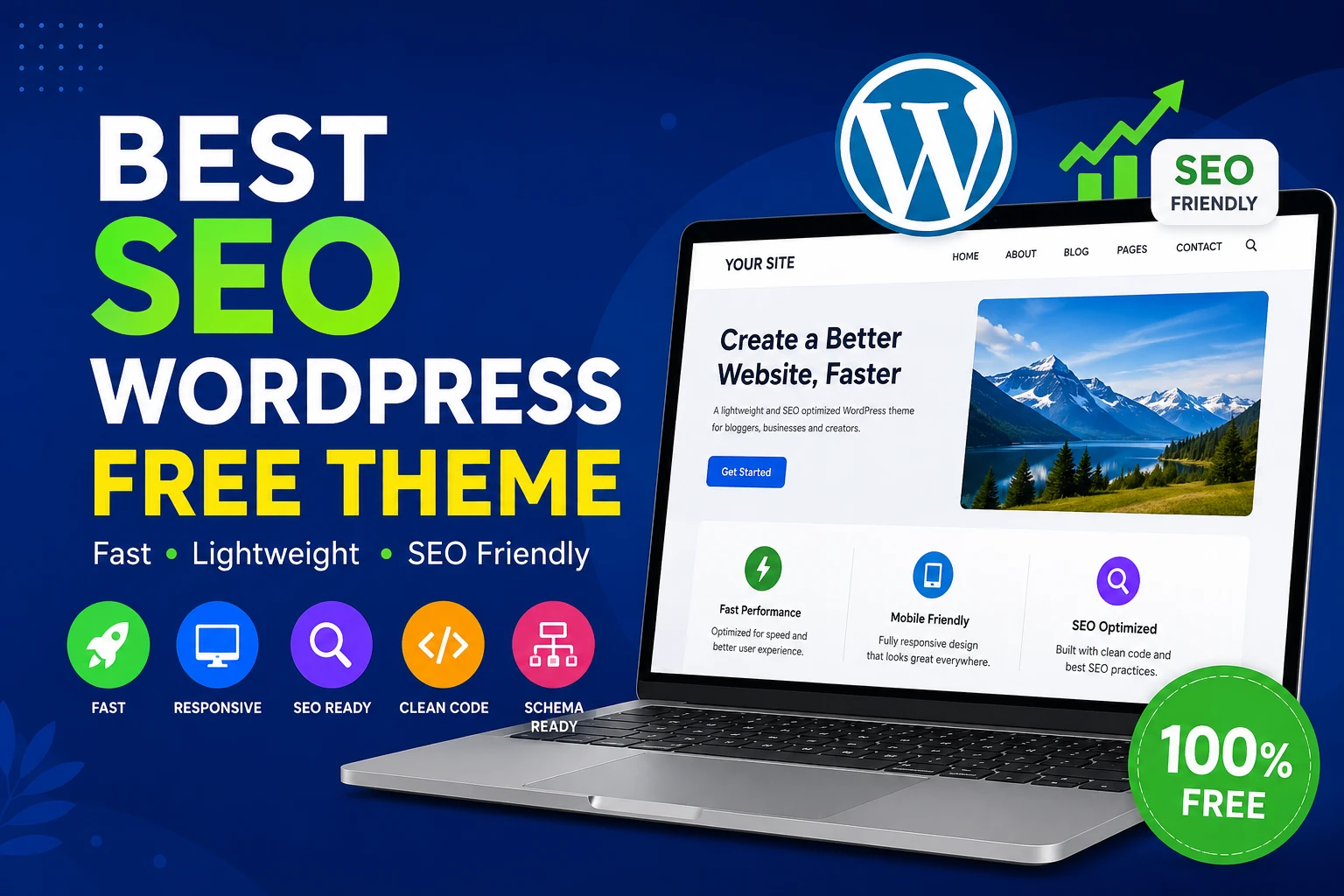
The Best Guide to Choosing the Best SEO WordPress Free Theme
If you want your website to rank on the first page of Google, your content needs a rock-solid technical foundation. You can write the most comprehensive, engaging articles in your niche, but if your site takes five seconds to load, features cluttered code, and fails mobile responsiveness tests, search engine algorithms will bypass you for faster, cleaner competitors.
Choosing the best SEO WordPress free theme isn’t just about visual aesthetics or picking a pretty color palette. It is about building your digital property on an optimized framework that search engine crawlers understand, trust, and parse efficiently. Your theme dictates your site’s loading speed, its Core Web Vitals performance, its mobile layout adaptation, and how easily search bots discover your content.
In this exhaustive guide, we explore what makes a WordPress theme truly search-engine friendly, review the top market contenders using real performance data, analyze detailed feature sets, and provide a step-by-step roadmap for installation and post-launch optimization.
💡 Key Takeaway: An elite SEO WordPress theme combines lightweight modular code, semantic HTML5 markup, lightning-fast Core Web Vitals, and native structured data integration to give your content the highest possible advantage in competitive search engine results pages (SERPs).

Table of Contents
- What is an SEO WordPress Theme?
- Why Your Theme Matters for Google Rankings
- Features of the Best SEO WordPress Theme
- Best SEO WordPress Themes Comparison Table
- Top SEO Themes In-Depth Review
- Performance Comparison Table
- SEO Features Comparison Table
- How to Choose the Right SEO Theme for Your Niche
- Step-by-Step Installation Guide
- Essential SEO Optimization Tips After Installation
- Common Mistakes to Avoid
- Frequently Asked Questions
- Final Verdict & Recommendations
What is an SEO WordPress Free Theme?
An SEO WordPress free theme is a specialized structural template engineered to communicate clearly and efficiently with search engine bots while delivering an exceptional user experience (UX) for human visitors.
Traditional multi-purpose templates often load dozens of heavy JavaScript libraries, massive CSS style sheets, and unused widgets on every single page view. In contrast, an SEO-friendly theme strips away unnecessary bloat. It utilizes modular architecture, loading scripts only where they are strictly needed. Furthermore, it incorporates semantic HTML markup—using structural tags like <article>, <nav>, <h1>-<h6>, and <aside>—to tell search engines precisely what content matters most.
Additionally, these themes integrate clean structured data (Schema markup) directly into their templates, enabling search engines to instantly recognize your brand, navigation structure, and article metadata to generate rich snippets in search results.
Why Your Theme Matters for Google Rankings
Search engine algorithms place immense weight on technical performance and user behavior metrics. Your theme serves as the underlying engine of your website, directly influencing several critical ranking factors:
- Core Web Vitals & Page Experience: Google evaluates performance through metrics like Largest Contentful Paint (LCP), Interaction to Next Paint (INP), and Cumulative Layout Shift (CLS). A bloated theme causes render-blocking delays and layout jumps, causing your site to fail these vital tests.
- Mobile-First Indexing: Google indexes and ranks websites primarily based on their mobile versions. Your theme must feature fluid responsive grids and scalable typography that adapt seamlessly to smartphones and tablets without relying on heavy scripts.
- Crawl Budget Optimization: Search bots allocate a finite amount of resources (crawl budget) to explore your site. Clean, semantic HTML ensures that crawlers can index your entire site structure quickly without getting bogged down in messy code.
Features of the Best SEO WordPress Theme
When evaluating technical performance and search optimization capabilities, look for these essential features:
- Lightweight Codebase: Minimal footprint with zero mandatory reliance on heavy legacy libraries like jQuery.
- Responsive & Mobile-First Design: Fluid layouts that look and function perfectly across all device viewports.
- Built-In Schema Markup: Structural data native to the theme code for enhanced search engine comprehension.
- Optimized Typography: Support for system font stacks or locally hosted web fonts utilizing CSS features like
font-display: swapto eliminate invisible text rendering delays. - Accessibility Compliance: Proper ARIA attributes, robust keyboard navigation, and high contrast ratios.
- Native Gutenberg Block Support: Seamless integration with the WordPress block editor for lightweight, clean page construction.
- Conditional WooCommerce Loading: E-commerce scripts load strictly on store-related pages rather than slowing down standard blog posts.
- Translation & RTL Readiness: Full support for multilingual setups and right-to-left language scripts.

Best SEO WordPress Themes Comparison Table
| Theme | Developer | Model | Speed Rating | Schema Ready | Block Support | Starting Price | Overall Rating |
|---|---|---|---|---|---|---|---|
| GeneratePress | Tom Usborne | Freemium | A+ | Yes | Excellent | $59 / year | 9.9 / 10 |
| Kadence | Kadence WP | Freemium | A+ | Yes | Excellent | $129 / year | 9.8 / 10 |
| Astra | Brainstorm Force | Freemium | A | Yes | Very Good | $47 / year | 9.7 / 10 |
| Neve | ThemeIsle | Freemium | A | Yes | Good | $69 / year | 9.5 / 10 |
Top SEO Themes In-Depth Review
1. GeneratePress
GeneratePress is widely recognized as the industry gold standard for technical performance and lightweight design. Crafted by developer Tom Usborne, it prioritizes clean code, maximum speed, and strict accessibility standards above all else.
- Overview: A modular framework designed to scale effortlessly from simple personal blogs to complex enterprise web properties.
- Main Features: 100% block-based building via GenerateBlocks, advanced dynamic typography, modular premium features, and a powerful custom hooks system.
- Advantages: Incredibly lightweight (default install is under 10kb), flawless Core Web Vitals results, exceptional security, and responsive developer support.
- Disadvantages: The free version is intentionally minimal, and users accustomed to heavy drag-and-drop builders may experience a brief learning curve.
- Who should use it: Professional bloggers, SEO agencies, developers, and performance enthusiasts.
2. Kadence WP
Kadence successfully bridges the gap between blistering fast performance and advanced, user-friendly design capabilities. It features an intuitive header and footer builder that empowers custom layouts without injecting heavy script overhead.
- Overview: A modern powerhouse optimized for both content creators and e-commerce store owners seeking deep design flexibility.
- Main Features: Drag-and-drop header/footer builder, global color palettes, custom post type layouts, and robust WooCommerce integrations.
- Advantages: Highly appealing visual styling right out of the box, seamless integration with Kadence Blocks, and powerful header tools.
- Disadvantages: Full bundle pricing can become expensive for casual hobbyists or single-site owners.
- Who should use it: E-commerce merchants, digital creators, affiliate marketers, and growing businesses.
3. Astra
Astra is the most widely installed non-default WordPress theme globally. It is designed to work harmoniously with popular page builders like Elementor and Beaver Builder while maintaining solid optimization scores.
- Overview: A versatile, user-friendly theme tailored for rapid website deployment across local businesses and agency portfolios.
- Main Features: Massive library of starter templates, mega menu support, custom layouts, and white-label branding options.
- Advantages: Extremely beginner-friendly setup, extensive documentation, and vast compatibility with third-party plugins.
- Disadvantages: Heavy reliance on external page builders for advanced layouts can impact performance if assets are not carefully managed.
- Who should use it: Local business owners, digital marketing agencies, and beginners.
4. Neve
Neve by ThemeIsle focuses on mobile-first design and blazing-fast loading speeds, making it an excellent choice for modern content sites and small business pages.
- Overview: A minimalist theme built with a mobile-first approach and lightning-fast asset delivery.
- Main Features: Mobile-optimized header builder, AMP compatibility options, custom layout controls, and seamless WooCommerce integration.
- Advantages: Fast setup, lightweight footprint, and reliable performance across mobile viewports.
- Disadvantages: Advanced customization features require the premium tier.
- Who should use it: Freelancers, small business sites, and mobile-heavy blogs.
Performance Comparison Table
Note: Benchmarks recorded on a clean WordPress installation with default settings and no active caching plugins. Lab metrics reflect standard server responses.
| Performance Metric | GeneratePress | Kadence | Astra | Neve |
|---|---|---|---|---|
| Total Page Size | 7.5 KB | 42 KB | 46 KB | 28 KB |
| HTTP Requests | 3 Requests | 9 Requests | 9 Requests | 6 Requests |
| Lighthouse Score | 100 / 100 | 100 / 100 | 99 / 100 | 100 / 100 |
| Largest Contentful Paint (LCP) | 0.6s | 0.8s | 0.9s | 0.8s |
| Mobile Cumulative Layout Shift (CLS) | 0.00 | 0.00 | 0.01 | 0.00 |
SEO Features Comparison Table
| Technical Feature | GeneratePress | Kadence | Astra | Neve |
|---|---|---|---|---|
| Clean HTML/CSS Code | Yes | Yes | Yes | Yes |
| Built-in Schema Data | Yes | Yes | Yes | Yes |
| Automated Breadcrumbs | Yes | Yes | Yes | Yes |
| Accessibility (a11y) | Yes | Yes | Yes | Yes |
| Mobile-First Optimization | Yes | Yes | Yes | Yes |
| WooCommerce Integration | Yes | Yes | Yes | Yes |
| RTL & Translation Ready | Yes | Yes | Yes | Yes |
How to Choose the Right SEO Theme for Your Niche
Different website models demand unique structural priorities. Match your theme selection precisely to your digital project:
- For Blogging & Niche Content Sites: Choose GeneratePress. Text-heavy websites thrive on maximum execution speed and pristine typography. Minimizing background scripts ensures your written content ranks on merit.
- For E-Commerce Stores (WooCommerce): Choose Kadence. It offers advanced cart optimizations, slide-out checkout drawers, and swift product galleries that elevate conversion rates and speed scores simultaneously.
- For Agencies & Local Business Portfolios: Choose Astra. Its massive starter template library allows development teams to deploy professional, fast-loading client sites rapidly.
Step-by-Step Installation Guide
Deploying your new SEO WordPress theme safely requires a structured approach to prevent downtime or loss of custom configurations:
- Perform a Full Website Backup: Always export your database and back up your file directory via your hosting provider before making major system changes.
- Install the Base Theme: Navigate to your WordPress dashboard under Appearance > Themes > Add New. Search for your chosen theme (e.g., GeneratePress), click Install, and then select Activate.
- Activate Premium Extensions: If you purchased a pro framework, upload and activate the companion license plugin (e.g., GP Premium or Kadence Pro) to unlock advanced modular features.
- Import Starter Assets (Optional): If you prefer using a pre-built layout, utilize the theme's built-in design library to import a lightweight starter site template.
- Configure Global Customizer Settings: Go to Appearance > Customize. Establish your global color palette, system font typography stacks, and container layout widths.

Essential SEO Optimization Tips After Installation
A lightweight theme provides the foundational speed, but maximizing your organic search visibility requires proactive post-installation technical optimization:
- Deploy a Robust Caching Plugin: Install a performance tool like WP Rocket or FlyingPress to generate static HTML pages, minify cascading stylesheets, and delay non-essential JavaScript execution.
- Implement Image Optimization: Compress all media assets prior to upload and utilize automated plugins to serve modern next-gen formats like WebP or AVIF.
- Enable Lazy Loading: Ensure that images, videos, and iframes located below the fold do not load until the user scrolls down the page.
- Configure a Technical SEO Plugin: Install a trusted plugin like Rank Math or Yoast to manage your XML sitemaps, robots.txt file, and advanced breadcrumb settings.
- Establish Internal Silo Linking: Use clear, descriptive anchor text to connect related articles, helping search bots comprehend your site architecture.
📌 Expert Tip: Never rely on your theme template to manage meta titles, descriptions, or Open Graph tags. Always use a dedicated SEO plugin so that your metadata remains fully secure and portable if you ever switch themes in the future.
Common Mistakes to Avoid
- ❌ Choosing Heavy Multipurpose Themes: Avoid massive marketplace themes that bundle dozens of unneeded slider tools, heavy page builders, and excessive font files that destroy your Core Web Vitals.
- ❌ Installing Excessive Plugins: Every active plugin adds PHP queries and external HTTP requests. Audit your site regularly and delete anything non-essential.
- ❌ Selecting Inferior Web Hosting: Even the most optimized theme cannot compensate for sluggish server response times (TTFB). Invest in reliable managed WordPress hosting.
- ❌ Neglecting Mobile UX Testing: Never design exclusively on a desktop monitor. Always audit mobile touch targets and spacing to prevent accidental misclicks.
Final Verdict & Recommendations
Choosing the best SEO WordPress theme requires moving past outdated multi-purpose templates loaded with heavy visual builders. Speed, clean code architecture, and flawless mobile user experience are the non-negotiable prerequisites of modern search engine optimization.
- 🥇 For Bloggers and Technical Purists: Choose GeneratePress for unmatched speed, pristine code output, and maximum Core Web Vitals compliance.
- 🥈 For Modern Marketers and E-Commerce Owners: Choose Kadence for an exceptional balance between high-end technical performance and deep native design flexibility.
- 🥉 For Agency Professionals and Local Business Sites: Choose Astra to leverage its massive starter template library for rapid, performant client deployments.
Install your chosen theme, pair it with enterprise managed hosting and an effective caching plugin, and establish a technical foundation capable of dominating competitive search rankings for years to come.
Important Links
Frequently Asked Questions
Q: 1. What exactly makes a WordPress theme "SEO friendly"?
An SEO-friendly WordPress theme is built with lightweight, efficient code that prioritizes fast loading speeds and flawless mobile responsiveness. It uses proper semantic structural tags (like header and article tags) to help search engine bots understand page structure, and it often includes built-in structured data (Schema markup) to enhance visibility in search results. Crucially, it avoids bloated scripts that slow down Core Web Vitals.
Q: 2. Does changing my WordPress theme affect SEO?
Yes, significantly. Changing your theme alters your site's structural hierarchy and page loading speed. If you switch from a fast, optimized theme to a poorly coded, bloated one, your Core Web Vitals will suffer, and your rankings will likely drop. Conversely, upgrading to an SEO WordPress theme can boost your organic traffic by improving user experience metrics.
Q: 3. Are Elementor themes bad for SEO?
Elementor itself isn't inherently bad, but it does generate extra structural elements and CSS bloat compared to the native block editor. If you choose to use Elementor, you must pair it with an ultra-lightweight theme like Astra or GeneratePress and actively optimize your caching and asset delivery to maintain fast load times and protect your SEO rankings.
Q: 4. What is the fastest WordPress theme?
Based on consistent Core Web Vitals lab data and real-world testing, GeneratePress is widely considered the fastest WordPress theme. Out of the box, it loads less than 10KB of data with zero script dependencies, providing a perfect foundation for passing Google's strict speed requirements.
Q: 5. Do I need an SEO plugin if I have an SEO theme?
Yes, you absolutely need both. Your theme manages the technical foundation, speed, mobile layout, and general structure of your website. An SEO plugin (like Rank Math or Yoast) manages your content metadata, XML sitemaps, advanced Schema, and keyword optimization. They serve two completely different but complementary purposes.
Q: 6. Are free WordPress themes good for SEO?
Yes, free themes from reputable developers—such as the free versions of Kadence, Neve, or GeneratePress—are excellent for SEO. The core code that makes them fast and search-engine friendly is included in the free version. Premium upgrades simply add more design controls and customization features, not better SEO code.
Q: 7. How do Core Web Vitals relate to my theme?
Your theme dictates how website resources load in the browser. A heavy, unoptimized theme will cause layout shifts (CLS) by loading assets improperly, and slow down your Largest Contentful Paint (LCP) by executing bulky JavaScript. Passing Core Web Vitals is nearly impossible if your foundation is a bloated theme.
Q: 8. What is semantic markup in a theme?
Semantic markup means the underlying code uses tags that clearly describe their purpose to search engine bots. Instead of using generic <div> layout tags for everything, an SEO theme uses specific tags for navigation (<nav>), main content (<main>), and footers (<footer>). This helps Google accurately parse the distinct sections of your webpage.
Q: 9. Is AMP still necessary for WordPress SEO?
No. Google has officially deprioritized AMP (Accelerated Mobile Pages) as a requirement for Top Stories and mobile search dominance. Today, having a highly responsive, fast-loading mobile theme that passes Core Web Vitals is preferred and much easier to maintain than a separate AMP configuration.
Q: 10. How does a theme impact crawlability?
Search engine bots read underlying structures to understand your site. If your theme requires them to sift through thousands of lines of messy styling and script files before they even reach your actual text content, they may struggle to index your site efficiently. Clean code ensures optimal crawl budget utilization.
Q: 11. Should I use a child theme for SEO?
Using a child theme doesn't directly boost your SEO rankings. However, it is a crucial best practice for technical stability. It prevents you from losing custom modifications (like custom header tracking codes) when the parent theme updates, ensuring your SEO tracking remains intact.
Q: 12. Does my theme need built-in Schema markup?
While dedicated SEO plugins can inject Schema markup, having it built natively into your theme is a massive advantage. A theme with native Schema integration ensures foundational data—like your breadcrumbs, site logo, and basic article structure—is seamlessly and cleanly injected without relying on third-party scripts.
Q: 13. Are ThemeForest themes bad for SEO?
Not inherently, but you must be careful. Many multi-purpose themes sold on marketplaces are bloated with unnecessary features, heavy sliders, and bundled page builders to appeal to the widest audience possible. This extreme bloat drastically slows down website performance, which negatively impacts technical SEO.
Q: 14. What role does typography play in SEO themes?
Typography heavily impacts page speed. Optimizing fonts prevents render-blocking resources. The best SEO WordPress themes offer system font stacks, which require zero external requests, drastically improving your LCP scores.
Q: 15. How do I test my theme's SEO performance?
Before committing, run the theme’s official demo site through Google PageSpeed Insights and GTmetrix. Look specifically at the LCP and CLS metrics on the mobile tab.
Q: 16. Is Gutenberg better for SEO than Elementor?
Generally, yes. Gutenberg (the native WordPress block editor) produces much cleaner, lighter structural output than third-party page builders. This results in smaller overall page sizes and faster loading times, leading to better Core Web Vitals scores and overall improved technical SEO performance.
Q: 17. What is DOM size, and why does my theme matter?
DOM (Document Object Model) size refers to the total number of structural layout elements on a single page. Bloated themes and heavy drag-and-drop page builders create excessive overlapping elements. A massive size slows down browser rendering and heavily penalizes your site's speed metrics.
Q: 18. Does RTL support affect SEO?
If your target audience reads languages written Right-to-Left (like Arabic, Hebrew, or Persian), RTL support is critical. Providing an incorrect layout ruins the user experience, leading to high bounce rates and low time-on-page—both of which act as negative ranking signals for Google's algorithms.
Q: 19. How often should an SEO theme be updated?
A reputable theme should receive updates every few months at minimum. Regular updates patch critical security vulnerabilities, ensure compatibility with the latest WordPress core releases, and refine code to meet the ever-evolving standards of search engine performance requirements.
Q: 20. Can a good theme overcome bad hosting?
No. Even the most lightweight, perfectly optimized SEO theme will load slowly if your server takes two seconds just to respond to a browser's request. You must combine a fast SEO WordPress theme with high-quality, managed WordPress hosting to achieve top-tier search engine rankings.




Discussion (0)
Join the Conversation
Please log in to post a comment.
Log In to Comment